Research:
I started my research for my project in thinking of the many of the stories that young people are told (both old stories and modern day ones) have a hint of adult themes in them and exploring the fact that originally they were morality tales. Many originated with a darker side, e.g. Sleeping Beauty was originally raped by the king while she was in her coma and gave birth to two sons. But were skewed either by publishers or writers to be more friendly, e.g. a prince kissed her and she woke up and lived happily ever after.While thinking about this, i've been keeping an eye on all the new films that seem to be trending at the moment to do with retelling stories or rehashing versions of old ones, for example:


As just a few, all have moved the original "nice" meanings from the stories to make more adult themed films.
Most have a new element of horror added to them, which started me researching on the moral themes within actual genred 'Horror' films:
"Horror Subgeneres might be organised around ideaologies, say, of the family, or of women's independence, or the larger overreaching themes of narative opositions such as good and evil, or life and death. These themes are organised insuch a way to bring stable cohreant meaning to the genre"
Page 27, 'The Horror Genre: Form & Function' Brigid Cherry.
"Wells (2000 6:7) lists the grand narratives of Horror to be:
- Social alienation
- A deep crisis of evolutionary identity
- A need to express the implaction of human existence in an appropriate aesthetic."
Page 168 ''
Going to go back to basics with the actual stories, in my second to last project I looked at lots of old fairy tales and lots of related work, which I'm still going to refrence, because I think I dealt with a broad range of stories and I think many of them can be used to help me find my way: http://risefallstealmake.blogspot.com/

An example of my previous work ^^
A relevant article that grabbed my attention a while back:
"Politically correct parents who shun traditional fairy tales are missing the chance to teach their children right from wrong, an educational expert claims;
But Sally Goddard Blythe, a child development expert, argues that stories including Rapunzel and Cinderella are crucial to children’s development. They nurture moral behaviour and show young people the strengths and weaknesses inherent in human nature, by contrasting good and evil, rich and poor and vanity and valour, she says.
In a new book, The Genius of Natural Childhood, she argues that while fairy tales may tackle difficult issues such as the death of a parent in Cinderella, they prepare them for life in the real world. They also enlist "children's innante wish for good to triumph".
http://www.telegraph.co.uk/Moraltales
There are a few books that I remember really connecting personally with the artwork and imagery behind them:

Published by HarperCollins, I really liked this releasing of the books (i'm not proud to say I have all of them at home, that's right...all 12 or 13). There have been many different versions including a cover that tied in with the film, but I think this looks more classic, using a basic colours and each image was only half realised and had something to do with what was inside the book (The front of this, the first book, starring Madam Octa).

Again published like HarperCollins, A Series Of Unfortunate Events had a big impact on my early literary reading, the most beautiful illustrations with this book from fantastic Brett Helquist (http://www.bretthelquist.com/) who is beyond amazing. I do prefer his black and white sketches to the coloured in full versions. The cover image on left is the US cover, which looks more like a library book which is a very unique thing to do with a childrens book, making it look like an adults book.
An example of his work:

"Lemony Snicket's A Series of Unfortunate Events
is one of the bleakest and most frightening children's book series. The first
book is titled "The Bad Beginning", and from there it only gets
worse. For starters there's Count Olaf and the fact that the kids' parents died
in a fire, and the recurring symbolic symbol of an eye which usually means
something bad (much like oranges in The Godfather trilogy)... "
http://tvtropes.org/pmwiki/pmwiki.php/NightmareFuel/ASeriesOfUnfortunateEvents
The books have a strong sense of moral relativism: the Baudelaires become more confused during the series about if they are in the right or wrong, feeling they have done bad things even though they are to bad people, does the end really justify the means.

Published by Faber and Faber, Awful End is a chilrens book by Phillip Ardagh, illustrated by David Roberts (http://www.davidrobertsillustration.com/) who again, mainly due to reading these books is a favourite illustrator of mine, he again works in a very similar way to Brett Helquist (lots of black and white lines) possibly ink drawings mostly with watercolour finish, an example of his work:

The books themselves
have a strong sense of family ties and again a morality code within them, such
as to complete a potentially bad act to save the life of someone
else.
Also by the same author and illustrator:
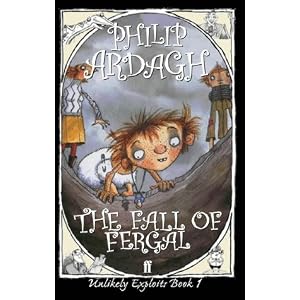
With many of the same themes, this time in a more obvious way, this book (I'm almost ashamed to say, I read when I was a little bit older, mainly due to the fact that I loved the author) but in a way I think thats a good thing, because if I had read it at the age bracket it's intended for, I think I would've been slightly scarred. There is a far higher desensitivity at a young age to the kind of concepts the book deals with. The problem isn't that the things that are happening are awful, but they're a very strange twisted version of reality, that almost has to come along with changing up a moral tale.
I'm wondering around this point, what it is that draws me to certain tales and allows me to absorb them, and retain them, even after all this time?
It may, in part, be due to the illustrations possibly, and all of these illustrations are reminding me strongly of my favourite
illustrator and print artists ever, Aubrey Beardsley.
Although controversial I consider Beardsley to be an incredibly skilled and
multi talented artist who was abit unusual in both his personality and his
choice of work, I like that he didn't really believe in Taboos and would work
for the love of working. Very intricate and nearly always black and white, his
illustrations are classic of the Art Nouveau style. I've noticed that all of these books share (albiet a modern version) a similar styling.
--------------------
Experiments and Developments:


With no particular drive or stimulus I tried illustration, in the simplest way I can think of, but these don't really work for me, I don't feel inspired by them. I think I need to look abit deeper into illustration.
--------------------
Research:


Looking at covers isn't something I just do, there is a style revival for illustrative and graphically bold, revamped covers at the moment (Image scanned from STYLE)
This research so far has been a one track train, i've been looking into books and illustrations (including an unfruitful trip to the local library) but I haven't been thinking about what makes you interested in a story, you don't tend to read a book for the moral theme behind it.
Something that caught my interest recently was an initiative for World Book Day (ways of trying to make reading and having tales told attractive to younger children, there were lots of Book
Day displays etc (http://www.worldbookday.com/)
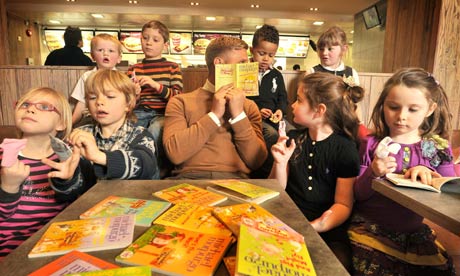
So I went and got one, they are illustrated in a friendly manner and come with a finger puppet that you play along
with the story with, I think the add ons make the stories more interesting and
it's a new way of telling the story.


I like the idea of taking a story, and telling it in a different way with certain aids etc. for me the aid was the illustrations and the feel of the book, but I guess everyone opperates on a different level, thats why we have different kinds of learning.
To write a children's book or a tale for children/adults:
"You've got to build in a sense of your audience as part of the way in which you're tough with yourself about what you're writing. Part of that reading child will inevitably be the reading child you once were. That's no bad thing, but quite often, I would suggest, this is not sufficient. You also need to get that child who is now the age of your target audience into your head too. "
--------------------
Experimenting:
I have to have a story in order for me to try and make story aids, so here is my own story, as i've been inspired by the childrens book, i'm going to give it some slightly childish tones:
In the
middle of the deep dark woods, lives Baby Crow.
Baby Crow
is playing hide and seek with his friends, Baby Robin and Baby Magpie.
It’s Baby
Crow’s turn to count.
“1, 2, 3,
4...”
“Hello
there, Baby Crow”
“Huh?”
“I said
hello Baby Crow. My name is Mr Snake. What are you playing?”
Mr Snake
uncoils himself and tips his hat to Baby Crow.
Baby Crow
knows that he shouldn’t talk to strangers.
“Don’t be
rude Baby Crow, I asked you a question.” Mr Snake Hisses.
“Hide and
seek, I’m counting” Replies Baby crow, proud that he’s in charge.
“I love
hide and seek, but I have something better than a game, but it’s not for
children Baby Crow. It’s a Big Crow game.” Mr Snake starts to slither away.
“WAIT...”
Baby Crow shouts after Mr Snake “...I’m a Big enough Crow aren’t I?”
“I’m not
sure BABY Crow, are you? “
“I’m the
Biggest, Bravest, Boldest Crow there is!”
“I’m sure
you are Baby Crow...well, come on then...” Mr Snake slithers off towards the
darkest part of the forest.
“I’m not
supposed to go into the dark parts. Baby Robin and Baby Magpie will be looking
for me, I better go...”
“I thought
you were the Big Baby Crow? Maybe you’re just the Big Baby” Chides Mr Snake.
“But but
but....ok, I’ll come”
So Baby
Crow and Mr. Snake walk for what feels like hours until they reach a hole in
the ground.
“Ok Baby
Crow, we’re here!”
“But this is just a hole...” Baby Crow realises he’s been tricked
“The surprise is
inside Baby Crow, take a good look” Mr Snake pushes Baby Crow further towards
the hole...
i've
been trying to make it with a slight undertone, I based it on one of my
favourite books The Lovely Bones Alice Sebold.
Now I have a story, I can make a book.
Using this guide (roughly)
I used a felt for backing and stuck to a small colour pallette. I printed the
story out onto yellowed thick paper and learnt that it's more complicated than
you'd think to seal a book together with the pages all in the right order. I
should've back-to-front-ed the story but I messed up abit so I had to
individually cut out the pages and seal them in one by one:


above is a screen shot from wen i was testing out texts and fonts to make the pages seem more itneresting, the text itself is positioned differently on each page in the style of "Sharp Teeth" by Toby Smith, a book which is set out rather like a poem with short sharp breaks. Which could be easier to read and absorb if there is someone who isn't used to reading etc.

The overall effect was good, and I like that it was portable and it looked really nice when it was finnished, but it really wouldn't cut it as a children's book or anything. I think i'd like to take THIS idea further, and develop it more.
Another way of using a book which could incorporate use of puppets rather like the Michael Morpurgo books is to make myself an Artists Book.
--------------------
Research:
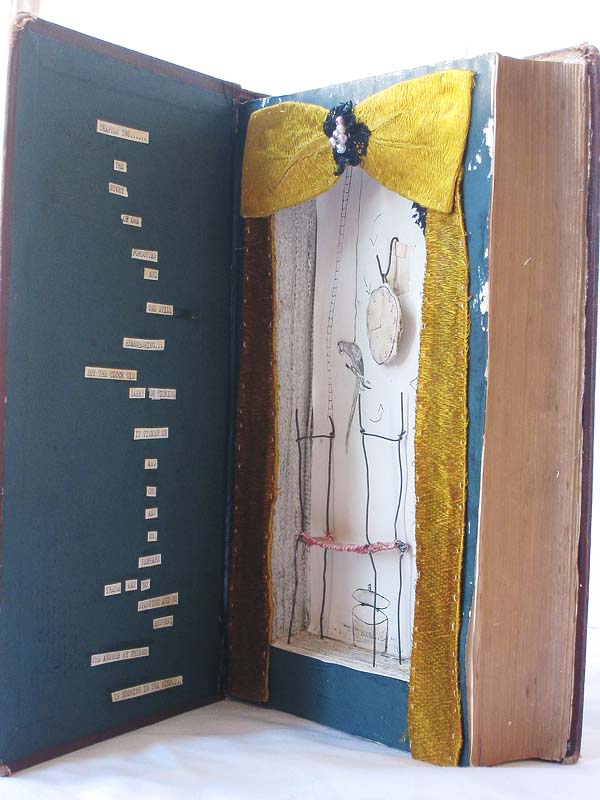
Jessie Chorley's collection of one off books that she's ripped, cut, sewn and fiddled into art are really fun and quirky and interesting, although what i'm thinking of doing is slightly more illustrative, I like the way in which she works. Although if I take my ideas down this route then I'm changing the function of the book from a child's book, to a piece of art.
--------------------
Development:
Ok, so to make my own artists book I used a simple framework and then decorated according to my story and theme:


Now to make the puppets which go inside:

Card Prototype for Baby Crow, i've made him look more like a blackbird, purely because it's harder to distinguish a black beak on a black background, and Baby Blackbird is abit of a mouthful if you're reading aloud so I've had to take some artistic liscence with this representation of a crow.


This is Baby Crow and Mr Snake from the story, they are made from felt and buttons and are fully bendable and movable and are abit more robust than my previous book, because the book is hollow inside it allows both of them to fit in, rather than there being a story, which I guess in a way negates it being a readable book, so there would have to be an audio with it, or it would have to be so it allows someone to play along with someone telling the story.
I'm going to take it a step further and make an even better Baby Crow to play with, because it is through play you learn:


I made Baby Crow using Fimo and acrylic paints, after i'd set him in the oven for 20 mins he is now rock hard and really quite tough.
Tutorial:
In the middle of the deep dark
woods, lives Baby Crow.
Baby Crow is an ordinary little
bird, with an ordinary little family; he’s just like me or you. He goes to
school, he plays with his friends, and he does his homework. Perfectly
ordinary.
Today, Baby Crow is playing
hide and seek with his friends, Baby Robin and Baby Magpie.
It’s Baby Crow’s turn to count.
“1, 2, 3, 4...”
“Why, hello there, Baby Crow”
“Huh?”
“I said, hello Baby Crow”
Baby Crow knows that he
shouldn’t talk to strangers.
“My name is Mr Snake. What are
you playing?”
Mr Snake uncoils himself and
tips his hat to Baby Crow.
“Don’t be rude Baby Crow, I
asked you a question.” Mr Snake Hisses.
Baby Crow hesitates for a
second; this is an adult he’s talking to, an adult asking him a question.
“Hide and seek, I’m counting”
Replies Baby Crow, proud to show that he’s in charge.
“I love hide and seek…”
“Me too it’s the best game
ever!” Baby Crow is excited someone’s interested in his favourite things.
“I have a much better game in
mind, would you like to play?”
“Better than hide and seek?”
“Maybe we shouldn’t play…after
all; it’s not for children Baby Crow. It’s a Big Crow game.” Mr Snake starts to
slither away, looking back over his shoulder.
“WAIT...” Baby Crow shouts
after Mr Snake “...I’m a Big enough Crow aren’t I?”
“I’m not sure BABY Crow, are
you? “
“I’m the Biggest, Bravest,
Boldest Crow there is!”
“I’m sure you are Baby Crow...”
Mr Snake sneers “well, come on then...”
Mr Snake slithers off towards
the darkest part of the forest.
“I’m not supposed to go into
the dark parts. Baby Robin and Baby Magpie will be looking for me, I better
go...”
“I thought you were the Big
Baby Crow? Maybe you’re just the Big Baby” Chides Mr Snake.
“But but but....ok, I’ll come”
So Baby Crow and Mr. Snake walk
for what feels like hours, through the dark trees and the muddy leaves, until
they reach a large hole in the ground covered in feathers.
“Ok Baby Crow, we’re here!”
“But this is just a hole...”
Baby Crow now realises he’s been tricked, and that he may never see his
ordinary little family or his ordinary friends ever again.
“There is a surprise is inside
Baby Crow, take a good look” Mr Snake pushes Baby Crow further towards the
hole, winding his long tail around Baby Crow and opens his mouth into a cruel,
crooked smile…
I think i've developed an illusrative style of story telling as far as I feel I can without ruining it for myself, although I do like the outcome of my developments I don't think it's functional enough to be a real-time-real-world object. Plus it's kinda aimed towards kids rather than something someone a little older could enjoy. I'm still pleased though - and I think I'm going to look at different areas now.

No comments:
Post a Comment